
With Adaptive Fee Pools, Orca introduces a smarter way for liquidity providers (LPs) to earn—dynamically adjusting trading fees based on market volatility. In this guide, we’ll explore what Adaptive Fee Pools are, how they differ from traditional fee structures, and how they interact with existing Whirlpool concepts like ticks and tick spacing. Whether you’re a seasoned LP or just getting started, understanding Adaptive Fee Pools can help you optimize your liquidity strategy on Orca.Documentation Index
Fetch the complete documentation index at: https://docs.orca.so/llms.txt
Use this file to discover all available pages before exploring further.
What Are Adaptive Fee Pools?
Fixed Fee Pools on Orca apply a fixed fee to every trade. LPs choose a pool with a given fee tier (like 0.05% or 0.3%), and that’s the fee traders pay—no matter the market conditions. Adaptive Fee Pools, on the other hand, introduce a more flexible approach. Instead of a single fixed rate, they combine:- Base Fee: The standard fee you select when depositing (just like in fixed fee pools).
- Adaptive Fee: A dynamic component that increases when prices move rapidly—i.e., when market volatility is high.
💡 Tip: Adaptive Fee Pools are a new type of Whirlpool pool. If you’re not ready to try them out, you can continue using fixed-fee pools as before.
How to spot an Adaptive Fee Pool in the app
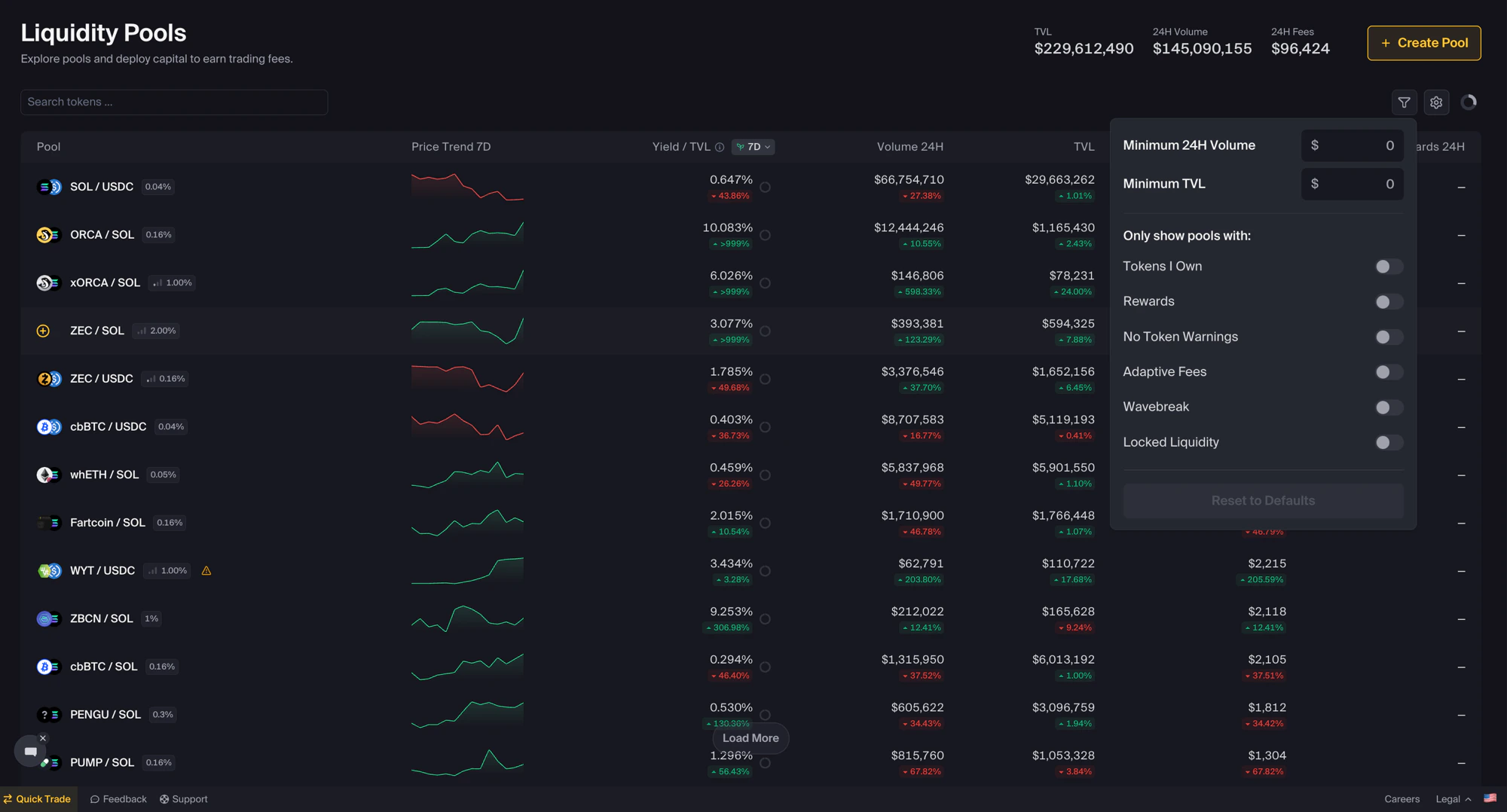
Adaptive fees show up in two places in the Orca UI:- Pools page filter. Open the filter panel on orca.so/pools and toggle Adaptive Fees to show only pools using this fee model.
- Pool detail banner. On an adaptive-fee pool’s detail page, the Create Position panel shows a banner: Adaptive Fees Enabled! Earning X% from trading fees. The percentage shown is the current effective rate including the dynamic component, so it will fluctuate with market conditions.

Why Adaptive Fees?
Market conditions aren’t static, so why should fees be? Imagine a high-volatility day—traders are active, prices are swinging, and the risk of divergence loss is elevated. In a fixed fee pool, LPs earn the same fee as they would on a slow day. Adaptive Fee Pools change that. As volatility rises, so does the adaptive fee, which means:- LPs are compensated for increased risk
- Traders pay higher fees only when markets are volatile
How Does It Work?
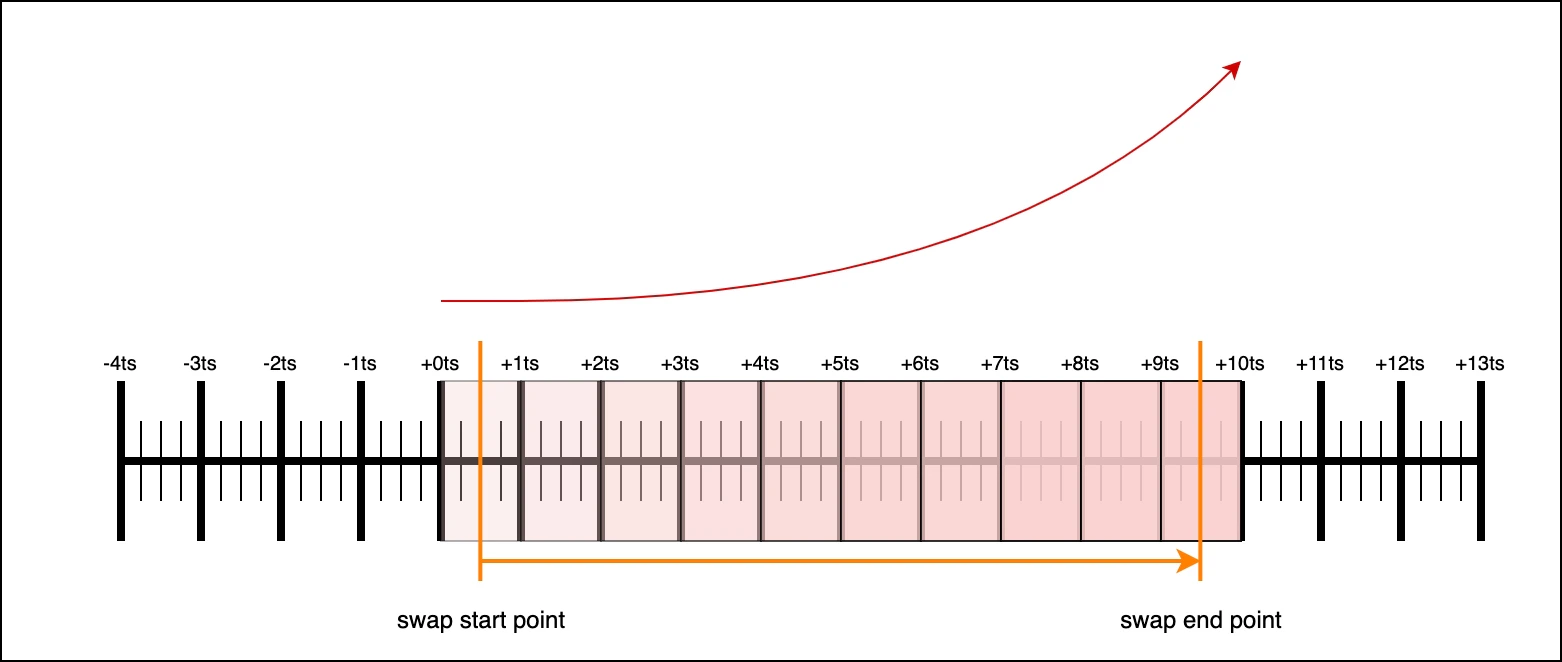
So how do Adaptive Fee Pools know when to adjust? It all comes down to price movement. Behind the scenes, the Adaptive Fee mechanism monitors how far the price moves during a trade—specifically, how many tick groups it crosses. If the price travels far from the reference point (the price at the start of the swap), the adaptive fee increases.You don’t need to worry about the math—Orca handles it all. But if you’re curious, check out the Developer Docs for a breakdown of how Adaptive Fees are calculated under the hood.Here’s the key idea:
- If prices have been stable leading up to a trade → low adaptive fee
- If prices have been volatile leading up to a trade → higher adaptive fee
Think of the adaptive fee like surge pricing in a rideshare app: fees increase when demand (price volatility) spikes, rewarding drivers (LPs) who stay on the road (supply liquidity) during busy times.
LP Strategy with Adaptive Fees
From an LP’s perspective, Adaptive Fee Pools offer a new layer of strategy. Here’s how they compare: Traditional Fee Pool Adaptive Fee Pool Fee is fixed (e.g. 0.3%) Fee starts at base rate, can rise dynamically Suitable for predictable, low volatility, markets Ideal for volatile or fast-moving markets Easier to estimate returns Offers potential for higher yield, but less predictable Competes primarily on tick range Competes on tick range and dynamic fee behavior If you’re already laddering liquidity across multiple fee tiers, you could consider using Adaptive Fee Pools to anchor your strategy in pools likely to see high volume or sharp price moves.What Stays the Same?
While Adaptive Fee Pools introduce a new way to earn, many core concepts remain unchanged:- Ticks and tick spacing still define where your liquidity lives.
- Fee tiers still serve as the base fee, and LPs choose them when depositing.
- You still earn fees when trades occur within your active tick range.
- The pool UI and deposit experience remains intuitive and familiar.